


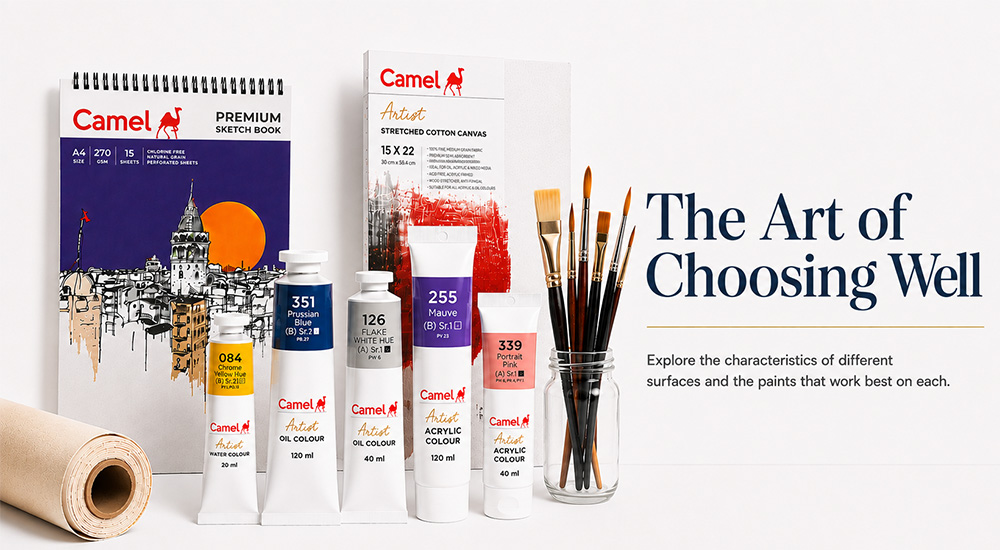
How to Choose the Right Paint for Canvas, Paper, and Other Surfaces
Paint that looks bright and smooth in the tube can turn out patchy or muddy if it isn’t suited to the surface it’s applied to. When things don't match up, trouble often follows. Colors can chip, flake off, or bleed into one another. Paper might warp, and canvas can develop an uneven texture.
Understanding which paint works best on canvas, paper, or other supports helps artists and students avoid frustration and get cleaner, more durable results. Let’s take a look at how you can pick the right paint for the right surface.
Know Your Surface
First, you need to know the main surfaces you'll be working with. Before you choose a medium, it's important to understand the material you're going to use.
- Canvas: Stretched cotton or synthetic fabric with a light texture, great for thicker layers and textured effects.
- Paper: Comes in many weights and textures – thin craft paper, sketch paper, and watercolour paper each behave very differently.
- Other surfaces: Cardboard, wood panels, glass, plastic, and art boards can all be used, but each needs a different paint type and preparation. Smooth, non‑porous surfaces usually need a primer or a paint with good grip, while highly absorbent paper can soak in colour very quickly if not handled carefully.
Acrylic Paint: Best for Canvas and Thick Paper
Acrylic paint is one of the most flexible options for both canvas and sturdy paper. It dries quickly, sticks well to prepared surfaces, and doesn't need strong solvents.
- On canvas, acrylics hold thick strokes, textures, and layers without lifting too much.
- On paper, thicker watercolour or acrylic‑specific paper works best; thin sheets can buckle when heavily layered.
- For classroom projects or small mixed‑media pieces, a simple acrylic palette (three primaries plus white) is often enough to explore colour mixing, backgrounds, and basic textures. Students can use affordable student‑grade acrylic tubes or jars that are easy to clean and store.
Watercolour: Designed for Paper, Not Standard Canvas
Watercolour is built for paper, especially properly sized watercolour sheets. Its strength lies in soft washes, light layers, and subtle gradients.
- Paper: Ideal. Use papers marked for watercolour; they handle wet layers and lifting without tearing.
- Canvas: Not ideal unless specially treated with a watercolour ground. A regular canvas can cause colours to pool or sit unevenly. Because watercolour relies on controlled water, it is less forgiving on rough or uneven surfaces. For school‑level projects, watercolour cakes or tubes on medium‑weight watercolour paper give clean, easy results that are simple to correct.
Oil Paint: Best on Canvas and Rigid Panels
Oil paint is known for its rich finish and slow drying time, which allows for smooth blending and detailed work. It suits canvas and rigid panels much better than paper.
- Canvas and panels: Both handle oil well when primed. Oils can be applied thickly or thinned into glazes without soaking through.
- Paper: Not recommended unless the paper is heavily coated and mounted. Oil can cause paper to sag, yellow, or crack over time. For beginners, compact student‑grade oil sets can be a gentle introduction to the medium, especially for small studies on ready‑primed boards.
Poster Colour and Tempera: Paper and School Projects
Poster colour and tempera are common in classrooms because they are affordable, water‑based, and easy to clean.
- Paper and card: These paints work well on drawing paper, chart paper, and cardboard, especially for posters and displays.
- Canvas: Less ideal unless lightly primed. Thin poster colours can look patchy on heavy canvas texture. Because they are opaque and fast‑drying, they are great for bright, flat designs. For classroom charts and models, a compact poster‑colour set applied to thick chart paper or cardstock gives a crisp finish. Some Indian‑made student‑grade poster‑colour ranges, such as those from a familiar writing and art‑material brand, are widely used in schools for this kind of work.
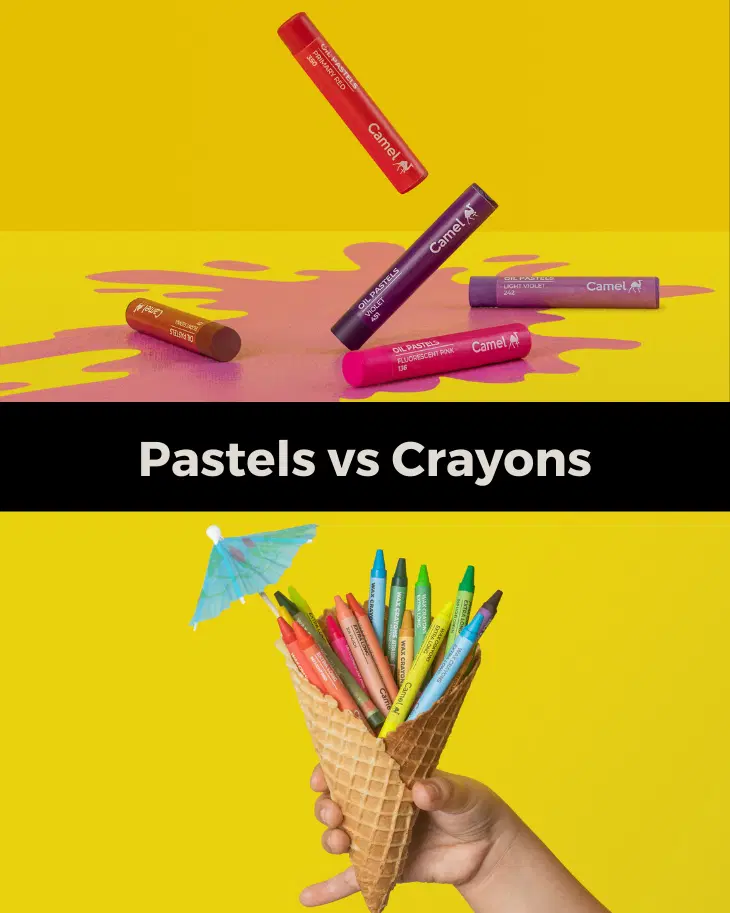
Pencil, Crayon, and Pastel: Mainly on Paper
Coloured pencils, crayons, and pastels are not paints, but they are often part of the same creative toolkit.
- Paper: The main home for pencils, crayons, and pastels. Rougher paper holds more pigment; smoother paper suits finer lines.
- Cardboard and textured paper: Good for pastels and crayons if a light fixative is used later.
- Canvas: Possible, but the texture can make fine detail hard. Pastels on canvas need a good fixative and can be messy. For students, a compact set of pencils and softer crayons works well on mid‑weight drawing paper and allows for smooth layering and blending. In India, a well‑known stationery and art brand like Camlin offers dependable student‑grade pencils that are comfortable for extended practice and classroom use.
Quick Test Patch Before a Big Project
A small test can prevent a lot of frustration.
- Take two or three scraps of the same surface and try each paint at different strengths—full colour, a little watered down, and a light wash.
- Check how the colour sits, whether it slides off, sinks in, or feels rough. This habit helps students and hobbyists build an intuitive sense of which paint works best on which surface.
Final Thoughts
Choosing the right paint for canvas, paper, or any other surface goes beyond simply memorizing rules. It's about understanding how each medium behaves when it meets its chosen material. Canvas, for instance, is often best suited for acrylics and oils. Paper, on the other hand, is the clear choice for watercolors, poster paints, and drawing tools.
A few simple, reliable combinations like acrylics on properly primed boards or watercolours on suitable paper can help turn material choices into a smooth, almost invisible part of the creative process.
Camel helps bridge the gap between theory and application, ensuring the focus remains on learning, experimentation, and the simple pleasure of creating art.
Frequently Asked Questions (FAQs)
Q. Which type of paint works best on canvas?
A. Acrylic and oil paints are generally best suited for canvas. Acrylic dries quickly and is easy to handle, while oil offers smooth blending and depth. Both adhere well to primed canvas surfaces and create long-lasting results.
Q. Can watercolour be used on canvas?
A. Watercolour is not ideal for regular canvas because it does not absorb properly. However, it can be used if the canvas is treated with a special watercolour ground that allows better control and colour application.
Q. Why does paint sometimes crack or peel off surfaces?
A. Paint may crack or peel when the surface and medium are incompatible. Poor surface preparation, lack of priming, or using unsuitable paint can prevent proper adhesion, leading to flaking, uneven texture, or long-term damage.
Q. What kind of paper is best for painting?
A. The best paper depends on the medium. Watercolour paper suits wet techniques, while thicker drawing or acrylic paper handles heavier paints. Thin paper may warp or tear when exposed to moisture or multiple paint layers.
Q. Are poster colours suitable for canvas painting?
A. Poster colours can be used on canvas but are not ideal. Due to their thin consistency, they may appear patchy on textured surfaces. They perform better on paper, cardboard, or chart paper for clean, flat designs.
Q. How can beginners choose the right paint and surface combination?
A. Beginners should start with simple combinations like acrylic on canvas or watercolour on paper. Testing small samples before starting a project understands how paint behaves and prevents mistakes during final artwork.
Did this article help you learn something new?
Share your thoughts with us in the comments below.
Leave a comment


Comment added
Comment updated
Comment deleted
More inspiration
“
“Artists are just children who refuse to put down their crayons.”