


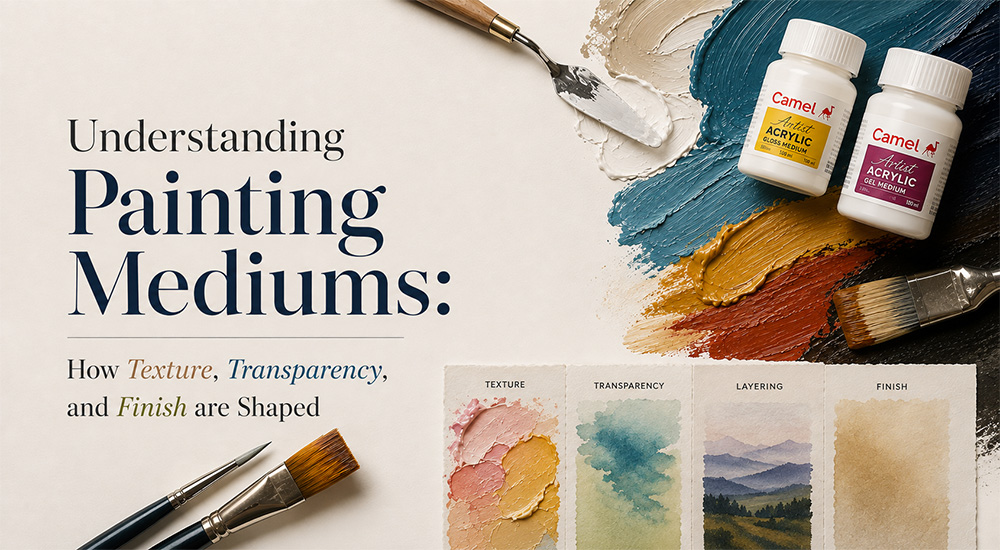
Understanding Painting Mediums: How Texture, Transparency, and Finish are Shaped
Painting is more than applying colors on the paper. How the paint spreads, how light and dark it looks, and how the art appears after drying are all key factors of art, and painting mediums help in achieving these effects.
They are mixed with colors to make them smoother, lighter, and good on the surface. They improve texture, transparency, and the last finish by making the painting attractive in appearance. In this blog, we give you a rundown of everything you need to know about painting mediums and how you can make the most out of them.
What are Painting Mediums?
Painting mediums are tools that are mixed with paint and control how it looks when put on the sheet. Then it starts settling and drying on the surface, making the art better. They make the paint smoother for clean strokes, lighter for transparent layers and can help develop texture that matches the artists’ imagination. The paint spreads properly on the surface and reduces rough or dull areas. These materials help the painters to use different techniques and make the artwork look neat and well-finished.
They are mainly used to:
- Help the paint to flow smoothly
- Control the thickness of the paint
- Create light, transparent, or layered effects
- Give the artwork a smooth and even finish
Types of Painting Mediums and Their Uses
Different painting mediums are used based on the type of paint and artwork.
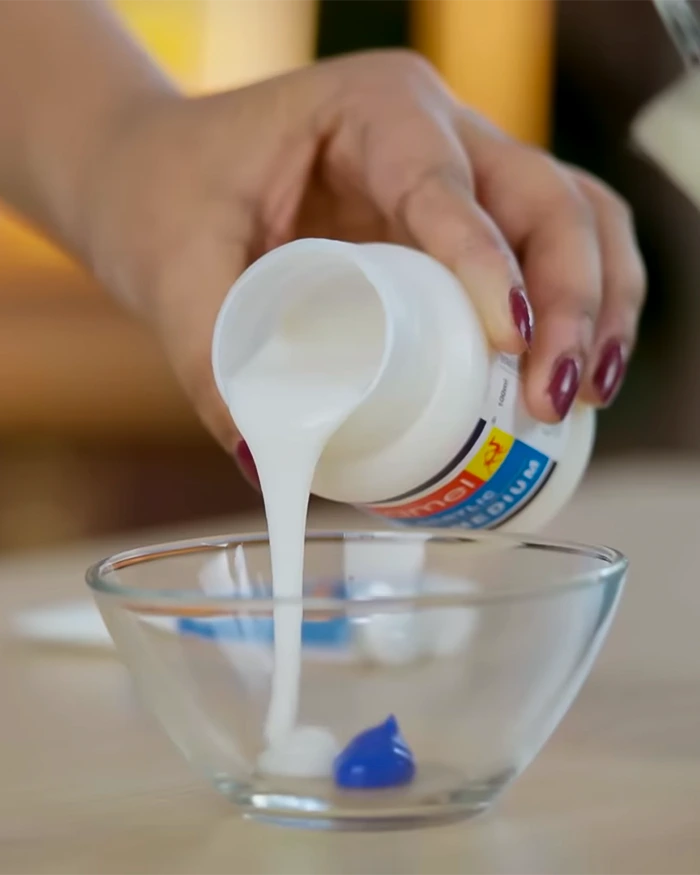
Acrylic mediums are used with acrylic paints to control flow, texture, and drying. They make the paint smoother, support layering, and create light or transparent effects without affecting color quality.
Oil mediums are used with oil paints to slow down drying time and improve blending. They allow artists to work longer on details and get smooth transitions between colors. Additionally, they also aid in cleaning the art materials used in oil painting from one’s work station.
Dry mediums are used without liquid paint, such as charcoal, pastels, or pencils. These are mainly used for sketching, shading, and creating texture in drawings.
Hobby mediums are commonly used for craft and DIY projects. They improve surface finish and are suitable for creative and decorative artwork.
Each type of medium supports a different style of painting and achieves better control and finish.
The Role of Tools Along with Mediums
Painting mediums work well when they are used in the right way. Brushes play an important role in how paint is applied on the surface and how texture appears.
Different brush shapes and softness shows different types of painting, like covering large areas or adding small inputs. When you use good brushes with the right mediums, paint spreads properly, and the surface remains smooth.
Using the right tools with painting mediums makes painting easier and gives cleaner and better results
Final Thoughts
Texture, transparency, and finish all depend on the type of paint used. Drawing mediums, painting mediums, acrylic mediums, and acrylic varnish, together they decide how an artwork looks and how long it lasts.
At Camel, we understand the needs of creativity. From the first drawing to the last protective layer, our materials are made to offer better control, smooth use, and good results. By using the right mediums and tools, painting becomes easier, more enjoyable, and looks well-finished.
Frequently Asked Questions (FAQs)
Q. What are painting mediums used for?
A. Painting mediums are used to improve how paint spreads, settles, and dries on a surface. They control texture, transparency, and thickness, making the painting look smoother and balanced after drying.
Q. Are painting mediums useful for beginners?
A. Yes, painting mediums are useful for beginners because they make paints easier to handle. They reduce rough patches and achieve cleaner and better painting results.
Q. Can painting mediums change the appearance of colors?
A. Painting mediums can affect how colors appear by improving brightness and smoothness. They help colors spread, reduce dull areas, and maintain a proper look on the painting surface.
Q. What is the difference between oil, dry, and hobby mediums?
A. Oil mediums are used with oil paints for smooth blending, dry mediums are used for sketching and shading without liquid paint, and hobby mediums are used for crafts and creative projects.
Q. Why are acrylic mediums commonly used in painting?
A. Acrylic mediums are commonly used because they are the most beginner-friendly mediums. This is because they improve paint flow, blending, and layering which reduces patchy areas, maintain color quality, and make acrylic paints easier to apply on the surface.
Q. Is varnish necessary after completing a painting?
A. Varnish is applied after painting to protect the artwork from dust, moisture, and fading. It also improves the final finish by reducing dull patches and giving the painting a complete look.
Did this article help you learn something new?
Share your thoughts with us in the comments below.
Leave a comment


Comment added
Comment updated
Comment deleted
More inspiration

“
“Art should comfort the disturbed and disturb the comfortable.”