


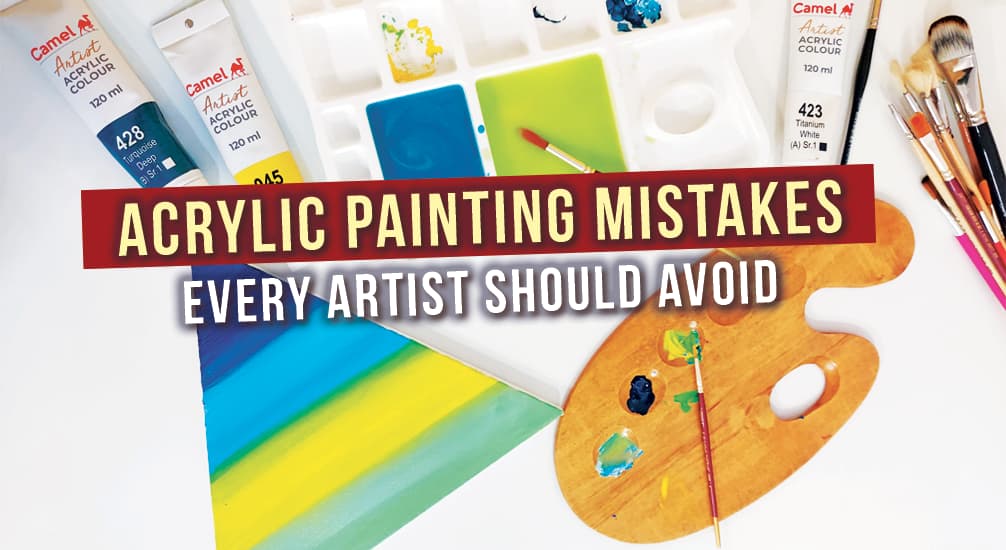
If you are reading this, you’ve probably dipped your brush into acrylic colour painting, and yes, acrylic colours are great – they dry fast, are water-soluble, and give an incredible finish once done. But sometimes, your first few attempts can be a little underwhelming, especially as a new artist.
A patchy finish or overly thin paint are fairly common issues artists deal with. To make things easier, we break down some common mistakes that come with acrylic colour painting and how you can fix them.
Common Mistakes with Acrylic Colours
Using Too Much Water
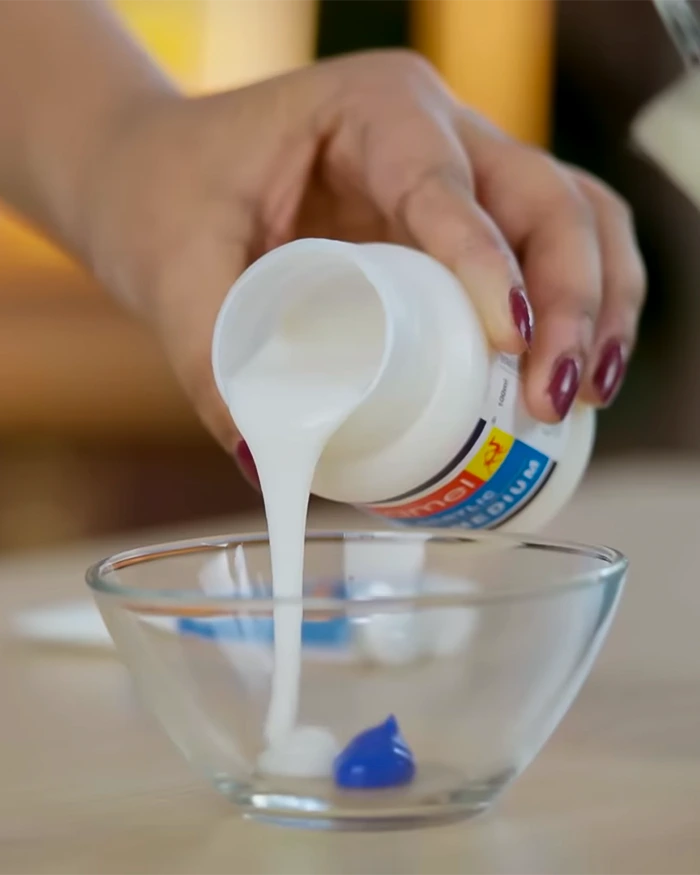
Adding too much water to dilute the acrylic paint can lead to over-thinning and breaking down the binder that holds the pigment. Once the pigment breaks down, it leads to a patchy, watery effect (and not the good kind that you get with water colours).
To avoid this, you either pay extra attention while you are mixing water or switch to other non-water mediums like gloss, matte, etc.
Wrong Brush & Brush Care
Your brush is the workhorse in your art, and choosing which kind of brush to use can make or break your end result. Stiff, coarse brushes can create unwanted strokes and easily ruin your progress. On the contrary, using a brush that’s too smooth can also hinder proper layering of paint. Additionally, artists often leave their brushes in the water after they are done with painting – sometimes letting them soak for hours. This ruins the quality of your brush and makes it stiff.
This is where brush care comes in. Make sure you clean your brushes properly and hang them to dry the right way. Proper care ensures a longer life. In terms of strokes and textures, for detailing, you should go for round brushes, whereas for coverage, a flat brush is the best.
Not Layering Correctly
Acrylic colours are optimal for layering. Working in layers adds a lot of depth and vibrancy to your art. However, many artists commit oversight when it comes to layering the right way. For example, waiting for the right amount of time for the paint to dry is crucial to make sure your layers sit properly. If you start painting before your previous layer dries, you will end up breaking the paint on the canvas.
Patience is a virtue. To get your layers right, start with thinner layers, let it dry, and then move on to denser paints.
Not Preparing Your Surface Correctly
It is important to prime your drawing surface (especially a cotton canvas) to make sure your paint sticks on the surface properly. A medium like Gesso on your canvas acts as a stable base for your painting and prevents your acrylic paint from peeling off or cracking.
Not Using Good Supplies
Using subpar art supplies can drastically affect the way you envision an art piece and what it actually looks like. While it's tempting to grab the cheapest option, investing in artist-grade acrylic paint is a game-changer.
At Camel, we offer premium acrylic colour painting tools, such as:
- A versatile, easy-to-use range of Artists Acrylic Colours
- Cruelty-free brushes for acrylic paint, water colours, and more
- Top-quality canvases to bring your vision to life.
- Gesso to prime your surface before you start painting.
Before You Go
Good art comes easily when you have a harmonious system that works with you, not against you. Keep these simple principles in mind, and use quality art supplies. Not only will your art become more enjoyable, but your results will be significantly more vibrant and polished.
Did this article help you learn something new?
Share your thoughts with us in the comments below.
Leave a comment


Comment added
Comment updated
Comment deleted
More inspiration

“
“You don't choose art. Art chooses you.”