


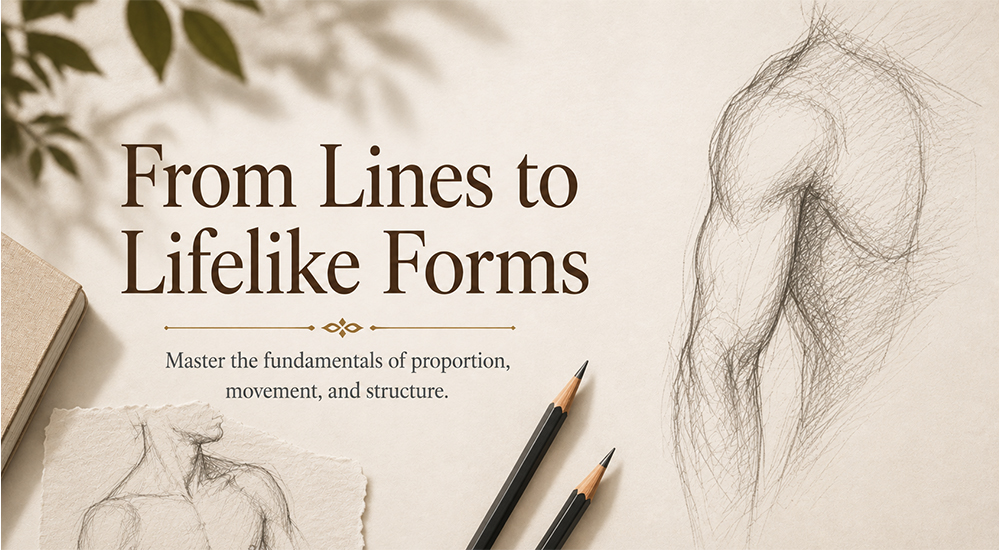
The Basics of Drawing Human Figures
Most people who try drawing a person for the first time end up with something that looks a little off, the head is too big, the legs too short, or the whole figure just seems stiff. That feeling is completely normal. Drawing the human body is not about natural ability; it is about learning a few core ideas and building on them steadily. Once those foundations are in place, everything else becomes much easier to figure out.
Basic Proportions of the Human Figure
Proportion is where everything begins. The most commonly used measuring tool in figure drawing is the head itself. A standard adult figure is roughly seven to eight heads tall. The chest sits about two head lengths down from the top, the navel at three, and the hips at four. The arms, when hanging naturally, fall to around mid-thigh.
These are not rules to be memorised exactly; they are reference points. When something in a drawing looks wrong but it is hard to say why, coming back to these measurements usually reveals the problem. With consistent practice, a sense of proportion starts to develop naturally, without needing to count heads every time.
Starting with Simple Shapes and Structure
The biggest mistake most beginners make is jumping straight into details, drawing eyes before the head shape is right, or adding fingers before the arm length is sorted. A much more reliable approach is to build the figure from simple shapes first.
The head is an oval. The chest is a rounded block. The hips form a smaller trapezoid below it, and the limbs are cylinders. This process is called "blocking in," and it is used by beginners and experienced artists alike. Getting the overall structure right at this stage means far fewer corrections later, and corrections at the block stage take seconds, not an hour of erasing.
The Role of Gesture in Figure Drawing
Even a perfectly proportioned figure can look lifeless if it has no gesture. Gesture is the sense of movement and energy that runs through the whole body, the way weight shifts to one hip, the slight lean of the torso, and the curve of the spine in a relaxed pose. It is what makes a figure feel like a person rather than a diagram.
Before any shapes are drawn, a single flowing line through the body, from the top of the head down through the spine to the feet, is a good starting point. It sets the energy of the pose from the very beginning. Short, timed gesture sketches done regularly are one of the most effective ways to develop this feeling for movement.
Shading and Adding Depth to the Figure
Once the structure is established, shading is what gives the figure weight and dimension. The key is to shade in the direction the surface curves, wrapping the tone around the form, rather than shading flatly across the page. This single habit is what separates a figure that looks three-dimensional from one that looks like a flat outline.
Hatching, cross-hatching, and blending are all useful techniques. The medium being used will usually suggest which works best. But in every case, the principle is the same: shadow wraps around form, and light reveals it.
Recommended Materials for Figure Drawing
Having the right tools does not make up for lack of practice, but it does make the process cleaner and more enjoyable. For structural sketching and initial linework, Drawing Pencils are a practical choice, they come in a range of grades that cover everything from light construction lines to darker, more defined strokes. For gestural work, Charcoals are well suited to quick, expressive mark-making and blend easily for tonal work. Fine Liner Pens work well for finalising linework with a clean, steady edge.
When bringing colour into figure studies, Artist Colour Pencils and Artist Soft Pastels offer smooth, blendable application, particularly useful for skin tones and the subtle shifts in light across fabric and form.
Final Thoughts
Figure drawing is one of those skills that feels impossibly hard at first and then, quite gradually, begins to click. The frustrating early sketches are not wasted time; they are what train the eye to see proportion, movement, and structure more clearly. Every artist who draws figures well has a pile of awkward ones behind them.
The ideas covered in this blog are proportion, blocking in, gesture, handling difficult areas like hands and faces, and building up shading. are not beginner concepts to be left behind once things improve. They are the ongoing practice. Even experienced artists return to gesture sketches as warm-ups and rebuild figures from simple shapes when something is not working.
For anyone looking to stock up on reliable drawing tools, Camel’s range covers everything needed at every stage of the process, from the first rough sketch to a fully worked figure study. The materials are accessible, consistent, and well suited to both practice sessions and finished work.
Frequently Asked Questions
Q. How should beginners start drawing human figures?
A. Beginners usually find it easier to start with rough outlines instead of detailed sketches. Simple shapes like ovals, blocks, and lines help in planning the body structure first. Once the pose looks correct, details such as facial features, clothes, and shading can be added more comfortably.
Q. Why do figure drawings sometimes look unnatural?
A. This mostly happens because body proportions are still being understood. Legs may look shorter, shoulders may seem wider, or the posture may feel stiff. Regular sketching and observing real people can slowly improve balance, posture, and overall body placement in drawings.
Q. What is the purpose of gesture drawing?
A. Gesture drawing helps artists capture movement and posture quickly. These fast sketches focus more on body flow and energy rather than details. Practising gesture drawings regularly can improve hand movement, observation skills, and the natural feel of figure sketches.
Q. Which art materials are useful for figure sketching?
A. Graphite pencils are commonly used for rough sketches and basic structure work because they allow easy corrections. Camel Drawing Pencils are often preferred for light outlines, while Camel Charcoals are useful for expressive strokes, shading, and quick practice sketches.
Q. How can shading improve human figure drawings?
A. Shading adds depth and dimension to a sketch, making the body look less flat. Light and shadow help define muscles, clothes, and facial structure more clearly. Beginners usually get better results by using soft strokes and building darker tones gradually instead of pressing hard immediately.
Q. Why are hands and faces harder to draw?
A. Hands and faces contain many small shapes and expressions, which makes mistakes more noticeable. Because of this, artists often practise them separately before working on complete figures. Repeated studies of eyes, fingers, and facial expressions can slowly improve accuracy and confidence.
Q. How much practice is needed to improve figure drawing?
A. Figure drawing improves through steady practice rather than speed. Even short daily sketching sessions can help strengthen observation, pencil control, and understanding of body movement. Over time, regular practice makes drawing human figures feel more natural and comfortable.


Did this article help you learn something new?
Share your thoughts with us in the comments below.
Leave a comment


Comment added
Comment updated
Comment deleted
More inspiration

“
“The artist is not a different kind of person, but every person is a different kind of artist.”