


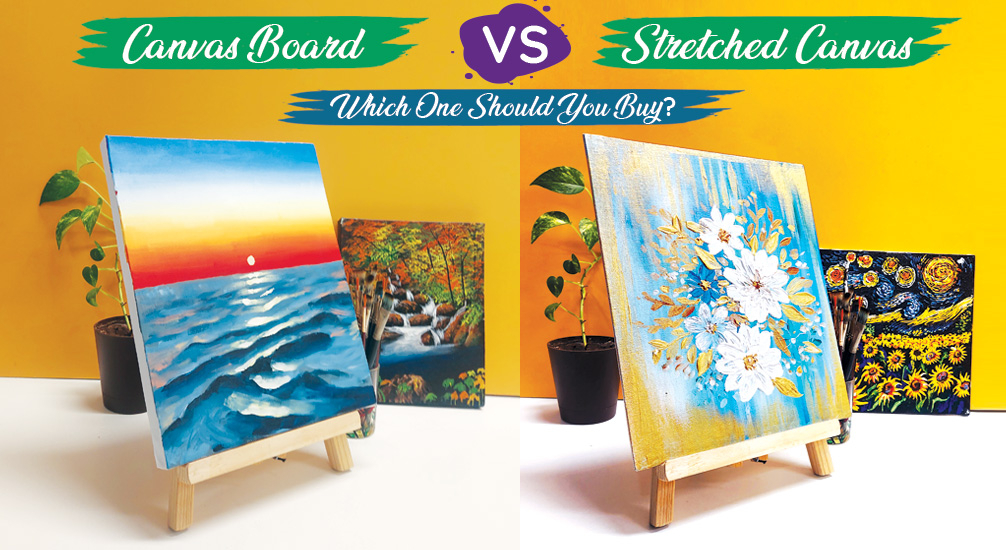
Your choice of canvas for painting can make or break your painting experience. Whether you're a beginner exploring acrylics or a professional oil painter, understanding the difference between canvas boards and stretched canvases is crucial for your creative journey. Both surfaces have their unique advantages, and knowing which one suits your needs will help you make an informed decision when you buy canvas online.
Here’s a comparative analysis of Camel Canvas Boards and stretched canvases for you, breaking down the features and use cases of each canvas to help you decide better.
What are Canvas Boards?
Canvas boards are high-quality cotton canvases pasted onto rigid hardboards. They combine the texture of a traditional canvas with a convenient soft backing. They're compact, easy to store, and don't require framing immediately after completion, making them an excellent choice for artists who value practicality.
The rigid surface of canvas boards prevents any flexing or warping during the painting process, which can be particularly beneficial when working with thick paint applications or palette knife techniques. They're also significantly lighter and more portable than their stretched counterparts.
What are Stretched Canvases?
Stretched canvases are primed cotton canvases stretched over wooden frames. This is the more traditional kind of canvas that’s been used by artists for centuries. A favourite among seasoned artists, they believe it has a more responsive surface that moves slightly with brush pressure.
These come as ready-to-hang, and the canvas can be stretched again if it loosens over time, thus ensuring longevity for your artwork.
Difference between A Canvas Board and Stretched Canvas
While both canvases serve similar purposes, they have their subtle differences that can be crucial for artists.
- Durability and Longevity: Stretched canvases generally offer longer durability, simply because the canvas used in them can be re-stretched once it starts to loosen up. The wooden frame provides structural integrity that can last for decades. Canvas boards, while durable, are better suited for studies, practice pieces, or smaller finished works.
- Portability: The hardboards in canvas boards make them strong yet easy to carry in comparison to stretched canvases. Their flat, rigid structure makes them easy to stack and transport without having to worry about damage to corners or surfaces, thus making them ideal for artists who like to work on the go.
- Price: Canvas boards are more economical simply because the structure used to paste canvas can be much cheaper than the seasoned wood used in stretched canvases. This also makes them a better choice for beginners or artists who paint frequently and need affordable surfaces for practice.
- Painting Experience: Stretched canvases provide a more traditional feel with slight bounce and flexibility, preferred by many professional artists. Canvas boards offer a firm, unyielding surface that some artists find easier to control, especially for detailed work.
Use Cases
- Canvas Boards: They are ideal for:
- Practice sessions, studies, and student work
- Small finished pieces
- Travel painting
- Economical painting surfaces
- Stretched Canvas:
- Professional finished pieces and gallery-ready artwork
- Large-scale paintings
- Works requiring edge-to-edge painting.
- Retaining art pieces long-term.
Before You Go
To summarise, there is no universally “right” answer; your choice ultimately depends on your artistic goals, budget, and working style. Beginners might start with canvas boards to build confidence without a significant investment. Professional artists often maintain both types, using canvas boards for studies and stretched canvases for final pieces.
Now that you might have a clearer idea of what each canvas is better for, you are one step closer to your final decision. Camel’s range of canvases is crafted with meticulous attention to quality, ensuring the perfect surface for your artistic expression. If you want to buy canvas online, you can explore our complete collection of painting surfaces and discover why artists across the country trust our products for their creative projects. With convenient online shopping and delivery across India, getting the perfect canvas for your next artwork has never been easier.
Frequently Asked Questions
Q. Can I use the same paints on both canvas boards and stretched canvases?
Ans. Yes, absolutely! Both canvas boards and stretched canvases work beautifully with acrylics, oils, and mixed media. The primed surface on both types ensures excellent paint adhesion regardless of your chosen medium.
Q. Do canvas boards need to be framed?
Ans. It is optional to frame canvas boards. Many artists choose to frame canvas boards for a more polished, finished look, especially for smaller works. However, they’re built in a way to sustain the canvas on their own.
Q. How do I store canvas boards and stretched canvases?
Ans. Canvas boards are made to be portable and travel-friendly, so they can be stacked flat. Stretched canvases, on the other hand, should be stored upright or hung to prevent damage to the canvas surface and wooden frame corners. Never stack stretched canvases face-to-face.
Q. Which canvas is better for beginners?
Canvas boards are generally recommended for beginners due to their affordability, ease of handling, and forgiving surface. They allow new artists to practise techniques without worrying about the investment, making them perfect for learning and experimentation.
Did this article help you learn something new?
Share your thoughts with us in the comments below.
Leave a comment


Comment added
Comment updated
Comment deleted
More inspiration

“
“Creativity is nothing but a mind set free.”