


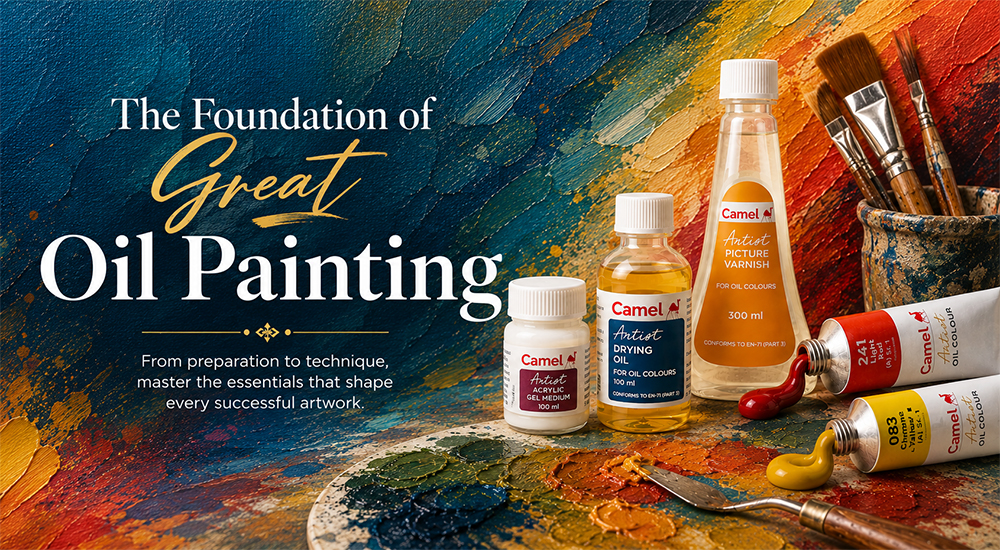
When Should You Use Oil Paints? Surface, Drying Time & Blending Explained
Some artworks are made slowly. They take shape with time, with colours and details building layer by layer. Oil painting matches this process, as it allows artists to work without rushing and refine their ideas as the artwork develops.
Oil paints are chosen for their rich colours, smooth blending, and long working time. When used with the right method, they give artists greater control and achieve balanced, well-finished results.
Why Oil Paints Are Chosen by Artists
Oil paints are widely preferred for their smooth consistency and strong colour depth. Unlike fast-drying mediums, oil paint colour stays workable for a longer time, making it easier to adjust, correct, and refine details without feeling rushed.
In the early stages of painting, oil colours allow ideas to be explored freely. As additional layers are applied, depth, balance, and realism are gradually developed.
Oil paints are commonly used when:
- Smooth and detailed blending is required
- Layered painting techniques are preferred
- Rich, long-lasting colours are desired
- Flexibility of time is important during the painting process
Because of these qualities, artist oil colours are often chosen for portraits, landscapes, and expressive artworks.
Choosing the Right Surface for Oil Painting
The surface used has a strong influence on how oil paint behaves during painting. Oil paints work best on surfaces that can handle moisture, weight, and repeated layering without getting damaged.
At the start, the surface should be firm and properly prepared. This helps the paint spread smoothly and supports the artwork over time.
Commonly used surfaces include:
- Primed canvases, which offer a balanced texture and support multiple layers of paint
- Canvas boards, suitable for practice and smaller artworks
- Prepared wooden panels, often chosen for detailed work
Among these options, canvases for painting are most widely preferred, as they allow the paint to settle evenly, while supporting blending and texture.
Understanding Drying Time in Oil Painting
One of the key features of oil painting is its slow drying time. This allows colours to be adjusted and blended over a longer period without rushing the process.
In the early stages, oil paint can remain workable for several hours or even days, depending on how it is applied and the surrounding conditions. This makes oil painting suitable for artists, who prefer a steady and thoughtful way of working.
Drying time is influenced by:
- The thickness of the paint layer
- The type of oil used in the paint
- Room temperature and airflow
Since drying takes place in stages, layers can be built gradually without affecting the colours underneath. This slow drying process adds to the depth and richness that oil paintings are known for.
Blending Techniques Made Easier with Oil Paints
Blending is one of the key strengths of oil painting. Smooth colour transitions are easier to achieve because the paint remains workable for a longer time.
In the early stage, colours can be gently blended directly on the surface. As the painting develops, controlled blending helps refine highlights, shadows, and mid-tones in a natural way.
Effective blending is supported by:
- Soft and well-maintained oil paint brushes
- Light pressure while applying paint
- Gradual layering rather than heavy strokes
The flexibility of oil paints allows artists to work at their own pace, making the blending process feel natural and unhurried.
Selecting the Right Brushes for Oil Painting
Brushes play an important supporting role in oil painting. Different brush shapes and bristle types affect texture, coverage, and the level of detail achieved.
Oil paint brushes are designed to handle thicker paint without losing their shape. They can be used for both broad strokes and fine detailing, depending on the painting style.
Brush selection is usually based on:
- The size of the artwork
- The level of detail required
- The type of texture being created
Proper cleaning and regular care of brushes help maintain their quality and ensure consistent results over time.
Final Thoughts
Oil painting is best suited for artists who value depth, smooth blending, and long-lasting results over speed. When the right oil paint colour, artist oil colour, suitable oil paint brushes, and well-prepared canvases for painting are used together, the painting process becomes more controlled and satisfying.
Camel offers a well-rounded range of oil colours, brushes, and painting surfaces developed to support artists at different stages. When chosen thoughtfully, these tools help artworks achieve clarity, richness, and lasting quality.
Frequently Asked Questions
Q. What are oil paints and how are they different from other types of paints?
A. Oil paints are slow-drying paints made with pigments suspended in oil (often linseed oil). Compared to acrylics or watercolors, they offer richer blending, longer working time, and deeper colour vibrancy.
Q. When is the best time to choose oil paints over other mediums?
A. Use oil paints when you want smooth blending, layering with glazes, and rich, luminous effects, ideal for portraits, landscapes, and classical styles where depth and texture matter.
Q. Are oil paints suitable for beginners?
A. Yes, beginners can use oil paints, but they require patience because they dry slowly and can be messy. It helps to learn basic techniques like glazing, fat-over-lean layering, and solvent use before advanced work.
Q. How long do oil paints take to dry?
A. Oil paints dry much more slowly than other paints. Thin layers may feel dry in a few days, but thicker areas can take weeks to months to fully cure.
Q. What surfaces should I use for oil painting?
A. Common surfaces include primed canvas, wood panels, and linen. All need to be properly primed to prevent the oil from degrading the surface over time.
Q. What are common mistakes to avoid when using oil paints?
A. Avoid thick underlayers without proper mediums (fat-over-lean rule), using too much solvent, or painting on unprimed surfaces. Also plan for proper ventilation since some solvents emit strong fumes.
Did this article help you learn something new?
Share your thoughts with us in the comments below.
Leave a comment


Comment added
Comment updated
Comment deleted
More inspiration

“
“Creativity is nothing but a mind set free.”