


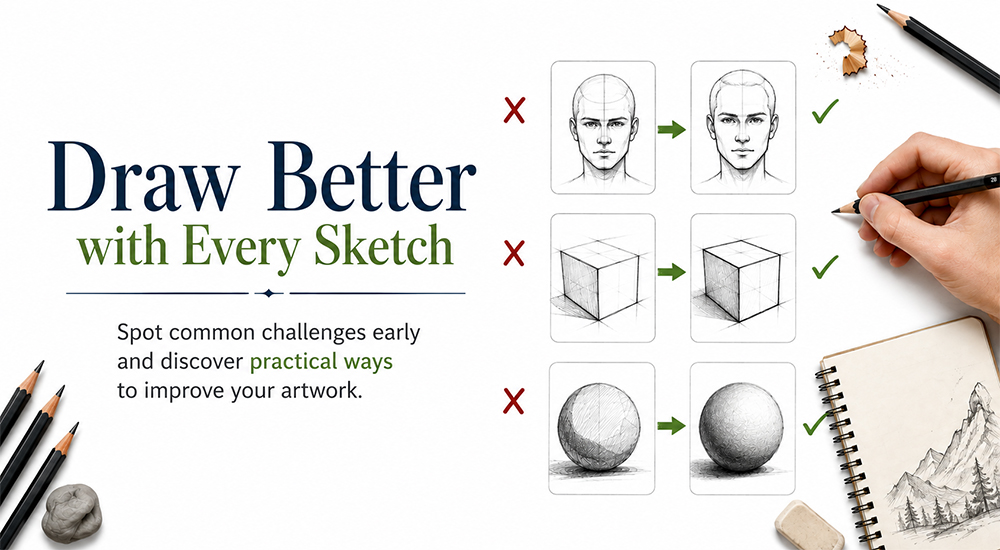
Common Drawing Mistakes Beginners Make and How to Fix Them
Drawing looks very easy when someone else is doing it. A simple sketch video online makes everything feel quick and perfect. But when beginners actually sit with a pencil and paper, things usually turn out very different. The face looks strange, the hands feel impossible to draw, and shading suddenly makes the whole page look dirty.
Almost every beginner goes through this stage.
A lot of people even stop drawing because they think they are “not naturally good at art." But most of the time, the problem is not talent. Beginners usually make a few very common mistakes without realising it. Once those small mistakes improve, drawings automatically start looking better.
Good practice and proper materials also help a lot. Many beginners use products from the Camel while learning because they are simple to use for everyday sketching and shading practice.
Making the Outline Too Dark
One of the most common beginner mistakes is pressing the pencil too hard from the start.
At first the sketch may look fine, but later when changes are needed, those dark lines become difficult to erase. Then the paper starts looking messy very quickly.
Most artists first draw very lightly and slowly darken the lines later. This gives more freedom to fix mistakes while sketching.
Drawing Pencils are commonly used for practice because softer and darker pencil grades help beginners control sketching better.
Trying to Draw Details First
Many beginners immediately start drawing eyes, hair, fingers, or tiny details before making the full shape properly.
This usually creates proportion problems later. One eye becomes bigger than the other, or the face no longer matches the head shape.
A simpler method is starting with rough shapes first:
- Circles
- Straight lines
- Boxes
- Basic outlines
It may look messy in the beginning, but it actually helps the final drawing look more balanced.
Overdoing the Shading
Shading is where many sketches start getting ruined.
Beginners often think darker shading automatically makes art realistic, so they press the pencil very hard. After some time, the drawing loses softness and starts looking patchy.
Good shading usually happens slowly. Light layers work much better than forcing dark tones immediately.
Many beginners also practise blending with tools like blending stumps because it helps pencil shading look smoother without damaging the paper.
Forgetting to Observe Properly
A lot of beginners draw what they think something looks like instead of actually observing it carefully.
For example, while drawing a cup, flower, or face, they quickly guess the shape instead of studying details like angles, shadows, and proportions.
Observation changes drawings completely.
Even simple practice like sketching objects kept on a study table can improve drawing skills faster than copying random pictures online.
Using the Wrong Paper
Paper quality matters more than beginners realise.
Very thin paper can make shading look rough and uneven. It also tears easily while erasing mistakes, which becomes frustrating during practice.
Many students use sketchbooks for regular drawing practice because the paper handles pencil work more comfortably, especially during shading and rough sketching.
Good paper also makes the whole drawing process feel smoother.
Expecting Perfect Drawings Too Quickly
This is probably the biggest mistake beginners make.
After seeing professional artwork online, many people expect their first few drawings to look perfect too. Then one bad sketch completely kills their confidence.
But drawing improves slowly. Even artists who draw professionally today once struggled with proportions, shading, and line control.
Bad sketches are honestly part of learning.
Small daily practice usually helps more than spending one full day trying to make a “perfect” drawing.
Final Thoughts
Every beginner makes mistakes while learning to draw. Some struggle with shading, some with proportions, and some with confidence after a few bad sketches. That is completely normal.
Nobody learns drawing perfectly in the beginning. Every beginner makes bad sketches, uneven lines, or shading mistakes while practising. That is honestly how most people learn art.
With regular practice, drawings slowly start looking better on their own. Good materials also make practice feel smoother and less irritating. That is why many beginners like using products from the Camel for sketching and simple drawing practice.
Frequently Asked Questions (FAQs)
Q. Why do beginner drawings look bad at first?
A. Most beginner drawings look uneven because new artists are still learning things like proportions, line control, and shading. This happens with almost everyone in the beginning. Drawing improves slowly with practice, observation, and patience instead of becoming perfect in just a few days.
Q. Why should beginners draw lightly first?
A. Drawing lightly helps beginners fix mistakes more easily while sketching. Dark pencil lines become difficult to erase later and can make the paper look messy. Most artists first make rough light outlines and only darken the final lines after the sketch shape looks correct.
Q. What is the biggest mistake beginners make while drawing?
A. One of the biggest mistakes is focusing on tiny details too early. Many beginners start drawing eyes, hair, or fingers before making the basic shape properly. This usually affects proportions and balance, which is why rough outlines and simple shapes are important in the beginning.
Q. How can beginners improve shading?
A. Beginners can improve shading by working slowly instead of making everything dark immediately. Light layers usually look smoother and cleaner than hard pencil pressure. Practising blending and understanding where light falls on an object also helps drawings look softer and more realistic over time.
Q. Does paper quality matter for sketching?
A. Yes, paper quality affects how the sketch looks and feels while drawing. Thin paper can tear during erasing and may make shading look rough. Many beginners prefer sketchbooks because thicker paper handles pencil work, blending, and shading more comfortably during regular practice.
Q. Why is observation important in drawing?
A. Good observation helps artists notice shapes, shadows, angles, and proportions correctly. Many beginners draw what they imagine instead of what they actually see. Looking carefully at real objects while sketching usually improves drawing skills much faster than randomly copying pictures from the internet.
Q. Which drawing materials are good for beginners?
A. Simple materials are usually best for beginners while learning sketching and shading. Many students use graphite pencils, blending stumps, and sketchbooks for regular practice. Products from the Camel drawing range are also commonly used because they are easy to handle during beginner art practice.
Did this article help you learn something new?
Share your thoughts with us in the comments below.
Leave a comment


Comment added
Comment updated
Comment deleted
More inspiration
“
“The world always seems brighter when you've just made something that wasn't there before.”